Artysta
Jerzy Tchórzewski
Wybrane prace


Biografia
A Surrealist to the end. From his debut at the First Exhibition of Modern Art (1948), through the Second Kraków Group, to André Breton's international Phases movement, Jerzy Tchórzewski was faithful to imagination, not to fashion.
Jerzy Tchórzewski (1928, Siedlce – 1999, Warsaw) fought in the Home Army during the war, and from 1946 to 1951 studied painting at the Academy of Fine Arts in Kraków, among others under Zbigniew Pronaszko. While still a student he made his debut at the First Exhibition of Modern Art in Kraków (1948), a manifestation of the Polish avant-garde, where he showed alongside Tadeusz Kantor, Maria Jarema, Andrzej Wróblewski and Jerzy Nowosielski, as well as Alfred Lenica, Tadeusz Brzozowski and Kazimierz Mikulski.
Surrealism was his spiritual choice for life. In 1957 he co-founded the Second Kraków Group, and from 1959 he exhibited with the international Phases movement, which gathered the continuators of Surrealism around André Breton. He remained faithful to this provenance regardless of the subjects he took up and of his “romance” with abstraction.
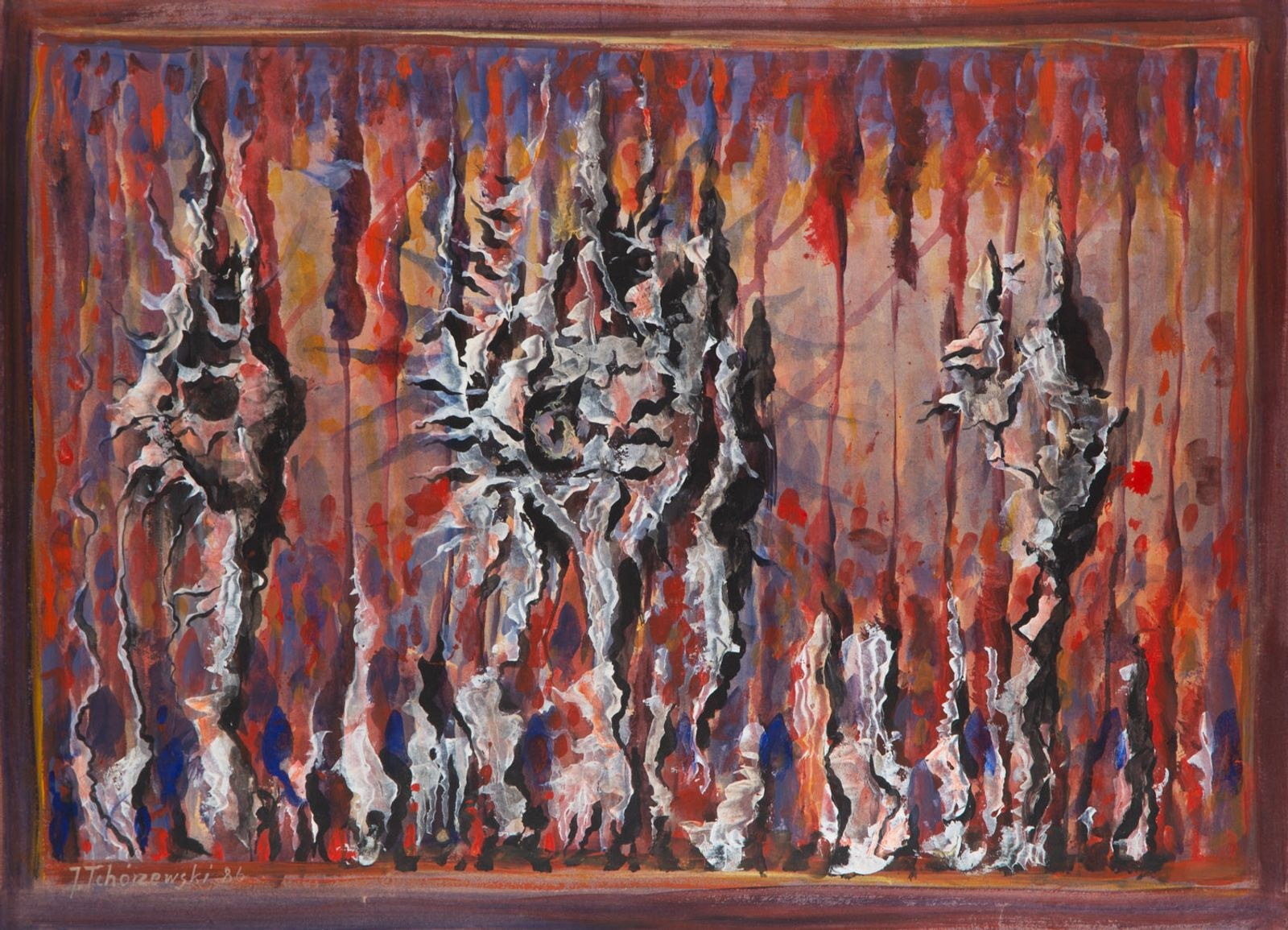
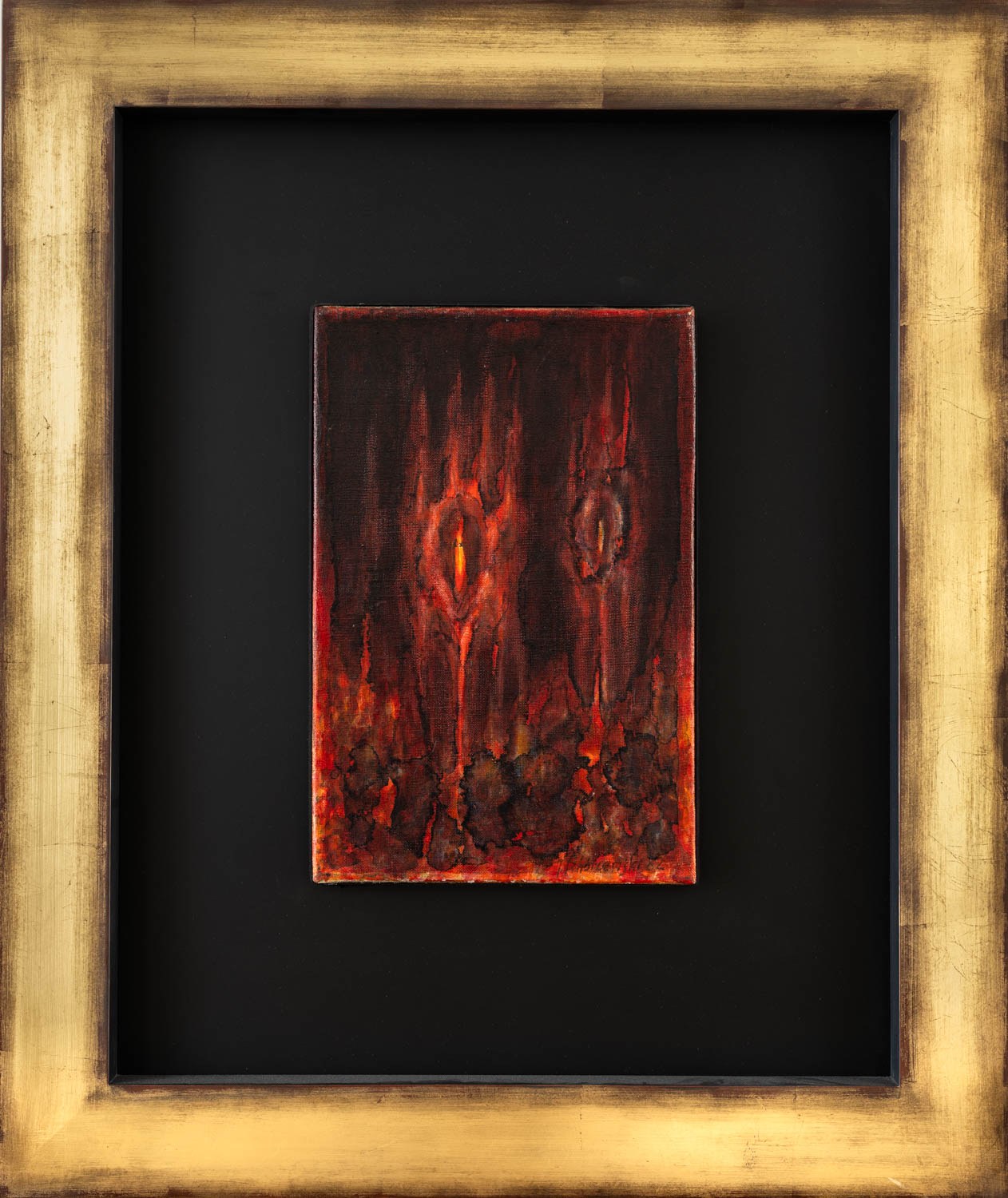
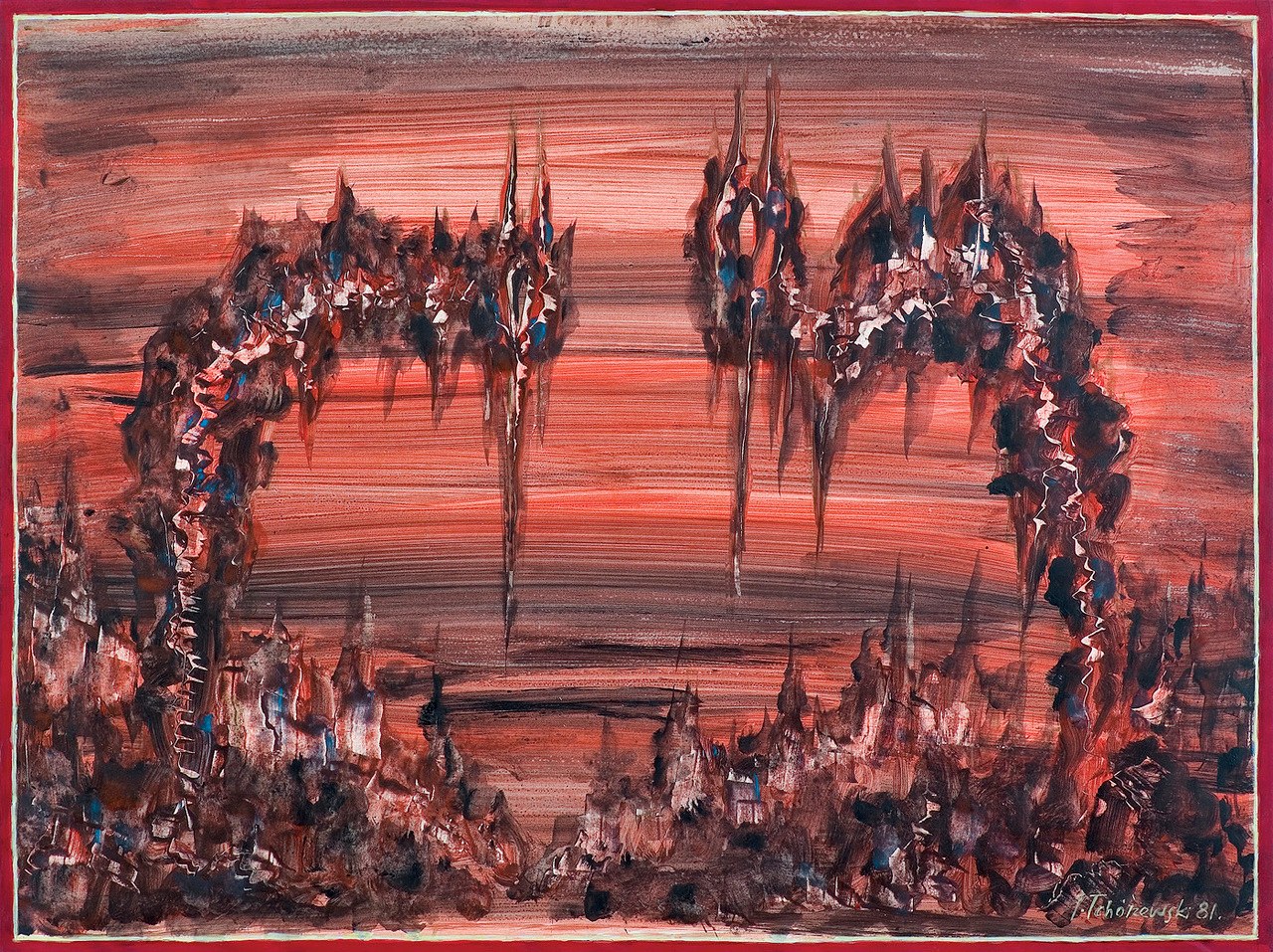
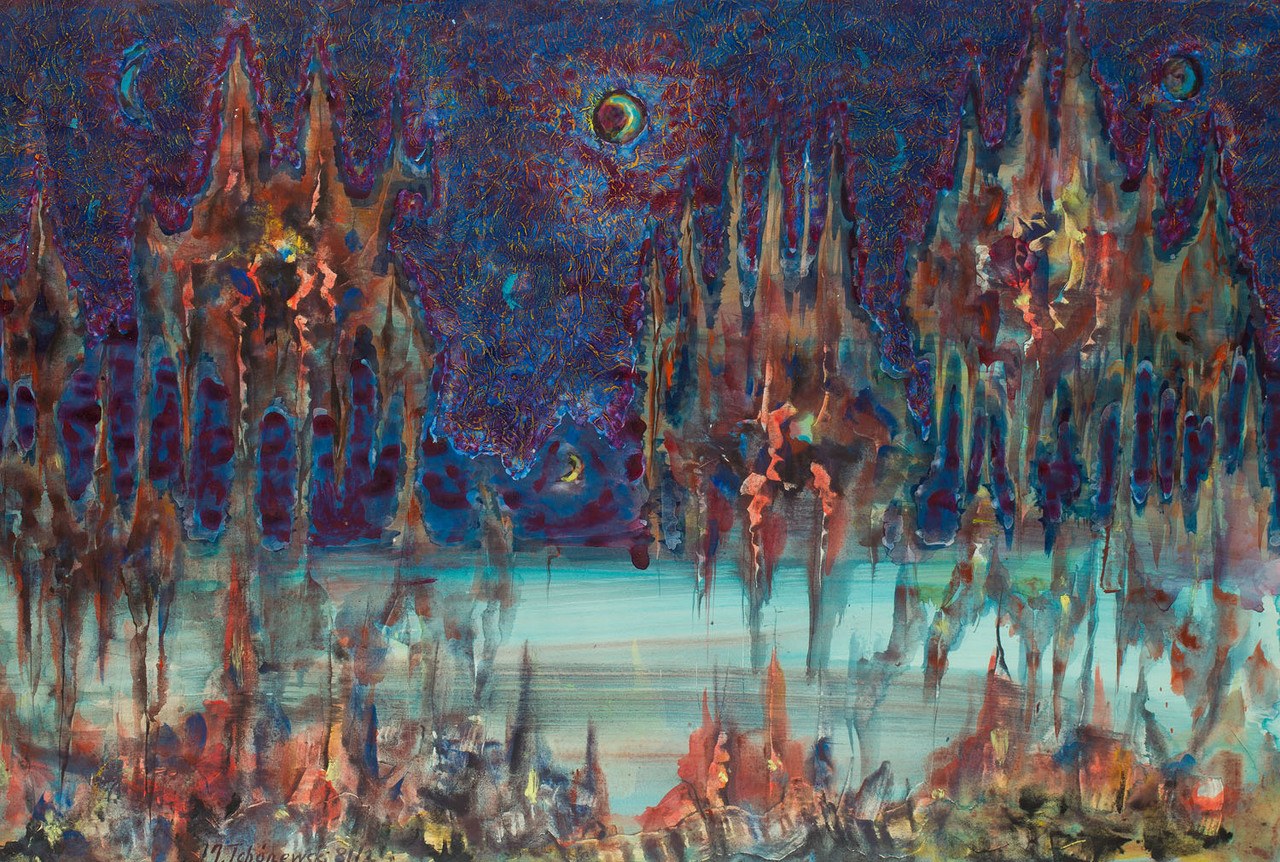
From imagined, disquieting landscapes peopled by fantastic creatures, his painting after 1955 turned into abstract visions of cosmic cataclysms: volcanic eruptions, stars flaring up and dying out. A key role was played in them by the dense matter of paint and by light radiating from within the painting. This stance was compared to the work of a demiurge calling life forth from the dead matter of the canvas. Around 1963 demonic “beings” appeared, shadows of humanity, and from the 1970s, religious themes.
Tchórzewski's sensibility was not confined to painting. He wrote poetry himself, valued contemporary poetry and maintained close ties with the literary milieu: he was a friend of Zbigniew Herbert and Tadeusz Różewicz (among those who wrote about his paintings were Herbert, Kantor and Nowosielski). This exchange of ideas meant that his canvases addressed existential and eschatological questions: he made abstraction a drama of existence.
For almost half a century, from 1954 to 1998, he taught at the Academy of Fine Arts in Warsaw, where he ran a painting studio. He won an award as early as the Warsaw Arsenal (1955), and later received the C.K. Norwid Art Critics' Award (1981), the Jan Cybis Award (1986) and the Herder Prize (1993). His works are held in the national museums in Warsaw, Kraków, Wrocław, Poznań and Gdańsk, in the Museum of Art in Łódź, and also in collections abroad, among others the Museum Folkwang in Essen, the Národní galerie in Prague and the Musée Cantonal des Beaux-Arts in Lausanne.
Consistent and singular, faithful to imagination throughout his life, Tchórzewski remains one of the most important visionary painters of the Polish post-war avant-garde.
Wystawy
Solo exhibitions
- 2020
Jerzy Tchórzewski
Kordegarda – Galeria NCK / Muzeum Archidiecezji Warszawskiej
Warsaw
- 1957
exhibition with Alina Szapocznikow (debut)
Zachęta
Warsaw
Group exhibitions
- 1959
Le Mouvement Phases (from 1959)
Paris and elsewhere
- 1955
“Against War, Against Fascism” (National Exhibition of Young Art)
Arsenał
Warsaw
- 1948
First Exhibition of Modern Art
Kraków